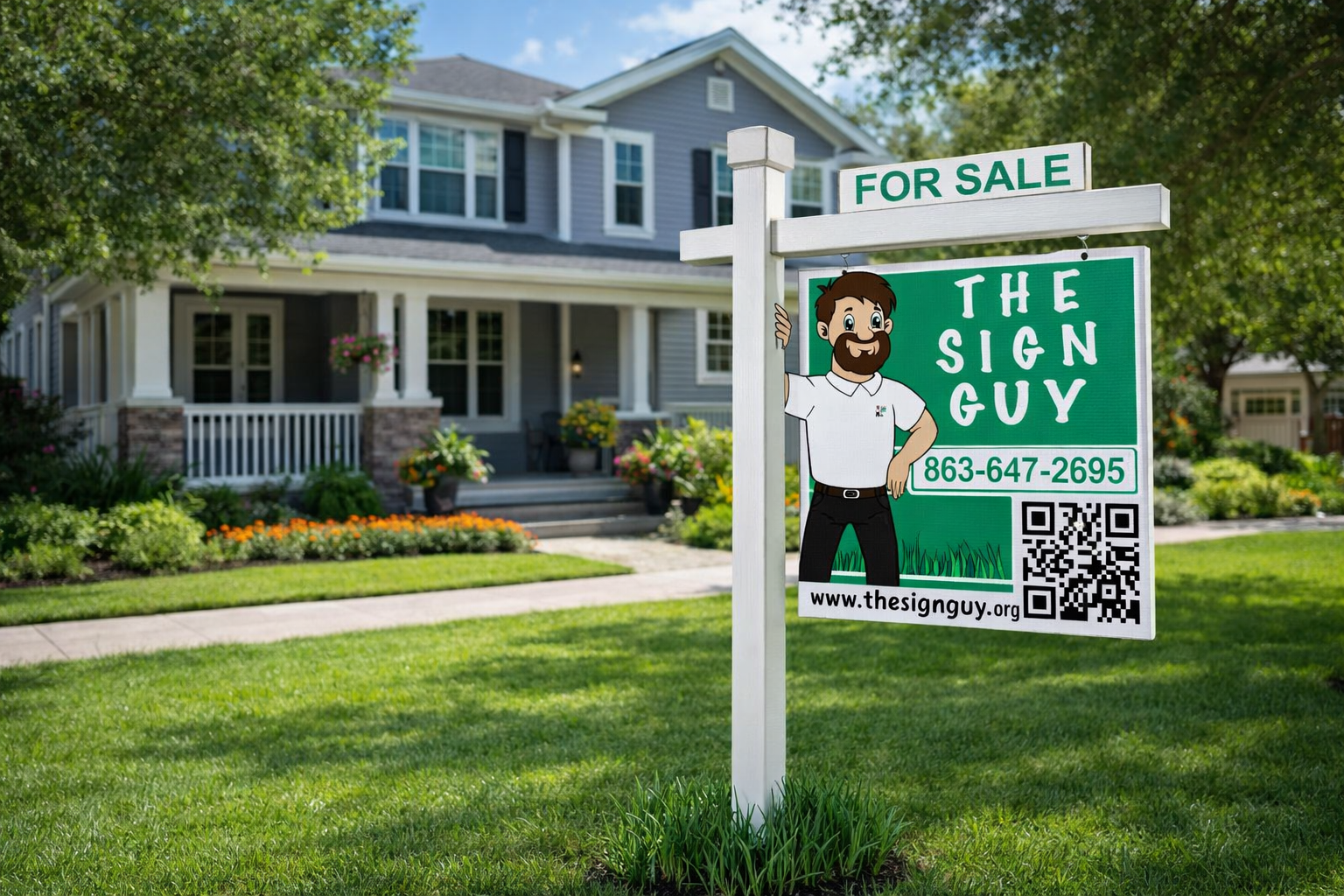
If most buyers start online, why put a real estate sign in the yard at all?
Because a yard sign does something digital marketing can’t: it turns your home into a high-visibility, 24/7 local billboard right where the buyer (or the buyer’s friend, neighbor, contractor, or visiting family member) already is. And that local visibility can create real inquiries, real showings, and real offers.
The data-backed truth: signs aren’t the #1 source—but they’re a real source
According to the National Association of REALTORS® (NAR), the internet is the top way buyers find homes (51%), but yard signs/open house signs still account for about 4% of how buyers found the home they purchased. (Source: NAR https://www.nar.realtor/research-and-statistics/quick-real-estate-statistics?utm_source=chatgpt.com )
4% may sound “small” until you remember what it represents: buyers who might not have found (or prioritized) your home without seeing it in person while driving, walking, or visiting the neighborhood. In a competitive market, a few extra qualified buyers can be the difference between:
one offer vs. multiple offers
price reductions vs. leverage
sitting longer vs. selling faster
1) A sign captures the most overlooked buyer: the “local-aware” buyer
Many buyers choose a home based on micro-location (specific streets, school zones, commute routes, proximity to family). A sign reaches people who already spend time in that area:
buyers who “drive the neighborhood”
renters nearby who want to buy close to work
people visiting friends/family in the community
It’s also a powerful trigger for word-of-mouth: neighbors often know someone who wants to move into the area (parents, friends, coworkers). Marketing pros repeatedly call out yard signs as a driver of local awareness and referrals. (Source: Oakley Signs https://www.oakleysign.com/ready-agent-blog/underrated-power-of-yard-sign-marketing-in-real-estate/?srsltid=AfmBOopgZuzqtU_MB1cMTC4h8TS-l2KRSHyFrnF-FaWYOigRt-VOXPiS&utm_source=chatgpt.com )
2) A sign builds trust because it makes the listing feel “real”
A physical sign reduces uncertainty. It tells buyers:
this home is actively for sale (not outdated/duplicate online info)
a real person can be contacted quickly
the property is legitimate and accessible for showings
That “tangible trust” effect is a common reason yard signs remain a staple even in a digital-first world (Source: eralestatecontent.ai https://www.realestatecontent.ai/ai-blog/uncovering-the-truth-do-yard-signs-still-matter-for-real-estate-agents-in-2023/?utm_source=chatgpt.com )
3) A sign improves response time (and speed matters)
When someone is already nearby and interested, a sign lets them act immediately:
scan a QR code to the listing page
call/text the agent
check open house times
schedule a showing faster
This reduces friction—and in real estate, less friction often means more showings and a cleaner path to an offer.
4) A sign reinforces your agent’s marketing ecosystem
The best results happen when your yard sign is part of a “stack,” not a standalone tactic:
Online exposure (photos + portals) + yard sign (local discovery) + open house/appointments (conversion).
NAR’s own rules and guidance around listing exposure emphasize that sellers benefit when a home is exposed to as many buyers as possible once it’s publicly marketed. https://www.nar.realtor/about-nar/policies/mls-clear-cooperation-policy?utm_source=chatgpt.com )
5) A sign can create better buyers, not just more buyers
People who take the time to drive by are often:
more serious
more location-driven (less likely to “bounce” to another area)
ready to tour quickly
Even if they don’t buy your home, the sign can generate backup interest—helpful if the first contract falls apart.
How to get the most benefit from your yard sign
Make it easy to act
Add a QR code to the property website or a single-page mobile listing
Make sure the phone number is large and readable from the street
Include an open house rider when applicable
Place it where it’s seen (and safe)
Aim for maximum visibility from the main traffic flow
Don’t block sidewalks, sight lines, or violate local rules/HOA guidelines
Keep it professional
A clean, sturdy sign signals “this home is being handled professionally,” which supports buyer confidence. (And confidence is a quiet driver of stronger offers.) (Source: Realty Times https://realtytimes.com/consumeradvice/ask-the-expert/item/1051891-the-impact-of-custom-real-estate-yard-signs-on-property-sales?utm_source=chatgpt.com )
When a yard sign might not be a fit
A sign isn’t mandatory, and there are valid exceptions (privacy concerns, HOA restrictions, seller safety, high-end off-market strategies). There’s generally no universal requirement that a seller must place a “For Sale” sign, though it’s customary in many markets. (Source: The Orlando Law Group https://www.theorlandolawgroup.com/blog/all/real-estate-agents-for-sale-signs/?utm_source=chatgpt.com )
Bottom line
Most buyers start online—but a yard sign is how you win the street-level buyer, the neighbor referral, and the drive-by decision-maker. NAR’s own statistics show signs are still part of how homes get discovered in real transactions. (Source: NAR https://www.nar.realtor/research-and-statistics/quick-real-estate-statistics?utm_source=chatgpt.com )